
Emotional Intelligence and Leadership Effectiveness: The Complete Guide
A Comprehensive Guide to Understanding and Strengthening Emotional Intelligence in Leadership.
Updated 7/08/2026 | Published 12/11/2025
Written by Chris Schutte
“It’s not the job, it’s the people.”
Every leader discovers this eventually. You can master strategy, operations, and technical execution—but none of it matters if you can’t navigate the human side of work.
Your stress becomes your team’s stress. Your frustration shows up in their performance. Your inability to read the room costs you trust. And when talented people quit without warning, it’s rarely about the work itself.
Emotional intelligence is the leadership skill that pays off daily. It helps leaders navigate the human side of work with more clarity, confidence, and care. Since managers have been shown to drive 70% of the difference in team engagement, developing EQ is one of the most high-impact things a leader can do.
Whether you’re selecting leaders, coaching others, or developing your own leadership effectiveness, emotional intelligence is an area where consistent effort yields lasting results.
This guide will show you what emotional intelligence actually is, why it matters more as you advance in the work environment, and—most importantly—how to start developing it.
Key Takeaways
- What emotional intelligence is
- 3 different models of EQ
- 5 components of emotional intelligence in leaders
- Why emotional intelligence matters for effective leadership
- Developing emotional intelligence in leaders
- How to build emotional intelligence
- What organisations gain from emotionally intelligent leadership
What Is Emotional Intelligence?
It’s common to hear both the terms “EQ” and “EI” when talking about Emotional Intelligence.
Emotional Intelligence (EI) is your ability to understand, recognise and manage emotions—both your own and those of the people around you.
It’s what helps you:
- Stay composed when everything’s falling apart
- Read what’s really going on in a tense meeting
- Know when to push and when to step back
- Build the kind of trust that makes people bring you problems early
- Turn conflict into productive dialogue instead of letting it fester
Emotional Quotient (EQ) is simply how we measure that capability—similar to how IQ measures cognitive ability.
In short: EI is what you have, EQ is how we measure it.
Emotional Intelligence vs. IQ
EQ is different from IQ and technical skills, in that it focuses on soft skills, or people’s ability to manage emotions, their relationship management, as well as communicate and handle stress in a positive way. IQ deals with cognitive and intellectual ability.
Technical brilliance gets you in the door. Emotional intelligence keeps you in the room.
A leader with high IQ but low EI might:
- Solve complex problems brilliantly but alienate the team executing them
- Make data-driven decisions that ignore the human factors that derail implementation
- Wonder why people don’t speak up, unaware that their reactions shut down dialogue
A leader with moderate technical skills but high EI can:
- Build coalitions that get impossible things done
- Navigate organisational politics without becoming political
- Turn average performers into top contributors through connection and coaching
Research consistently demonstrates that EI predicts leadership success more reliably than IQ or technical expertise. The higher you rise, the more this matters.
The 3 Different Models of Emotional Intelligence
Emotional Intelligence isn’t one single thing—it’s been studied and defined in different ways. It’s helpful to know that there are three main ways to define and assess it: the ability model, trait model, and mixed model.

The Ability Model
Developed by Peter Salovey and John Mayer, this model treats EI as a skill set: Can you accurately perceive emotions? Can you use emotional information to guide thinking? Can you understand emotional complexity? Can you manage emotions effectively?
Best for: Task-based assessment and training specific emotional skills
The Trait Model
Introduced by Konstantin Petrides, the trait model views EI as part of personality: How do you typically perceive yourself in emotional situations? What are your emotional tendencies and self-perceptions?
Best for: Understanding your emotional patterns and predicting real-world behavior
The Mixed Model
Blends emotional competencies with personality traits and social skills—the approach popularised by Daniel Goleman with five key components.
Best for: Practical leadership development.
The Five Components of Emotional Intelligence for Leaders
Daniel Goleman’s framework breaks emotional intelligence into five areas. Most leaders are strong in some and weaker in others—the key is knowing where you stand and where to focus.

1. Self-Awareness: Knowing What You're Feeling and Why
You can’t manage what you don’t notice.
Self-aware leaders recognise their emotions in real-time and understand how those emotions influence their decisions and impact others. They know their triggers, their patterns, and their blind spots.
What this looks like in practice:
- Noticing you’re defensive before snapping at someone
- Recognising when stress is making you micromanage
- Understanding why certain people or situations push your buttons
- Knowing the difference between your reaction and the situation itself
What low self-awareness costs you:
- Unintentional harm to relationships
- Decisions made from emotion disguised as logic
- Repeating the same mistakes without knowing why
- A reputation that doesn’t match your intentions
2. Self-Regulation: Managing Your Emotions Rather Than Being Managed By Them
Feeling frustrated is human. Sending that email at midnight is a choice.
Self-regulation is your ability to pause between stimulus and response—to choose how you show up rather than being hijacked by whatever you’re feeling. Leaders who master this create stability for their teams, especially during chaos.
What this looks like in practice:
- Taking three breaths before responding to criticism
- Feeling angry but waiting until you’re calm to address an issue
- Acknowledging disappointment without letting it derail the team
- Adapting your approach when your first instinct isn’t working
What poor self-regulation costs you:
- Damaged relationships from reactions you later regret
- Teams that walk on eggshells around your mood
- Decisions made in anger or fear that you can’t easily undo
- A reputation for being unpredictable or volatile
3. Motivation: Staying Driven Through Setbacks
Motivated leaders don’t just pursue goals—they inspire others to stay committed when the path gets hard.
It’s about maintaining purpose and resilience in the face of inevitable obstacles and modeling the persistence and optimism that helps teams navigate difficulty.
What this looks like in practice:
- Viewing failures as data rather than identity
- Maintaining focus on long-term vision despite short-term setbacks
- Finding meaning in the work beyond external rewards
- Helping others reconnect with purpose when momentum lags
What low motivation costs you:
- Teams that disengage when you disengage
- Inability to inspire commitment beyond compliance
- Giving up on important initiatives too soon
- Creating a culture of cynicism or learned helplessness
4. Empathy: Understanding What Others Are Experiencing
Empathetic leaders can read between the lines, understand what’s not being said, and respond to the human being in front of them—not just their role or function. This doesn’t mean agreeing with everyone; it means understanding them well enough to lead them.
What this looks like in practice:
- Noticing when someone’s “I’m fine” doesn’t match their body language
- Understanding why someone is resisting without taking it personally
- Adjusting your communication style to what the other person needs
- Making space for emotions without becoming overwhelmed by them
What low empathy costs you:
- Missing early warning signs that someone’s struggling or leaving
- Misreading resistance as defiance when it’s actually fear or confusion
- Giving feedback that lands wrong because you didn’t consider the recipient’s context
- Building strategies that look good on paper but ignore human realities
5. Social Skills: Building Relationships That Get Things Done
Leadership is relationship work.
Social and interpersonal skills in this context aren’t about being popular—they’re about connecting authentically, communicating clearly, influencing without manipulation, and building the relationships that make collaboration possible.
What this looks like in practice:
- Adapting your communication for different audiences without being fake
- Building rapport quickly with diverse stakeholders
- Navigating conflict in ways that strengthen rather than damage relationships
- Creating environments where people want to contribute their best thinking
What weak social skills cost you:
- Initiatives that stall because you can’t build a coalition
- Influence that relies on positional authority rather than respect
- Isolation at senior levels when you need connection most
- Inability to have difficult conversations productively
Emotional Intelligence in Leadership - Why it Matters
Higher Emotional Intelligence in leadership Is Often Associated With:
• Strong interpersonal relationships and team cohesion
• Effective conflict resolution and communication
• Adaptability in fast-changing environments
• Empathy and understanding of diverse perspectives
• Resilience under pressure and emotional self-regulation
• Motivating and inspiring others
Lower Emotional Intelligence is Often Associated With:
• Difficulty managing stress or emotional reactions
• Challenges in building trust or rapport
• Miscommunication or interpersonal tension
• Resistance to feedback or change
• Limited awareness of team morale or dynamics
• Struggles with collaboration or empathy
Emotional Intelligence is linked to better decision-making
Leaders are constantly faced with complex decisions that affect people, processes, and profits. Emotional intelligence helps leaders remain calm under pressure, avoid impulsive reactions, and consider the emotional impact of their decisions. A self-aware, effective leader can recognise when personal biases or stress are clouding judgment and take steps to mitigate these influences.
Build Trust and Psychological Safety
Trust is the currency of leadership. Leaders who demonstrate empathy and authenticity build environments where employees feel safe to speak up, share ideas, and admit mistakes. This psychological safety is essential for innovation, collaboration, and continuous improvement. When employees trust their leaders, engagement and loyalty increase, leading to better retention and performance.
Manage Conflict Effectively
Conflict is inevitable in any organisation. Leaders with high emotional intelligence are better equipped to navigate conflict constructively. They can listen actively, understand differing perspectives, and mediate solutions that respect all parties. Rather than avoiding conflict or escalating tensions, emotionally intelligent leaders turn disagreements into opportunities for growth and alignment.
Improve Engagement and Motivation
Motivated teams are productive teams. Leaders who understand what drives their people beyond KPIs and bonuses, can tailor their approach to inspire and energise. Emotional intelligence enables leaders to connect with employees on a human level, recognising achievements, offering meaningful feedback, and aligning individual purpose with organisational goals.
Adapt to Change
Change is a constant in today’s changing world, whether it’s restructuring, digital transformation, or market disruption. Emotionally intelligent leaders are more resilient and adaptable. They can manage their own stress, support others through uncertainty, and communicate change with clarity and empathy. This emotional agility helps organisations navigate transitions more smoothly.
Emotional Intelligence and Leadership in Different Contexts

With that being said, context matters.
While high EQ is generally seen as a leadership asset, it’s important to recognise that different roles and environments require different emotional strengths. For example:
• In high-pressure technical roles, lower EQ may correlate with deep focus and analytical detachment.
• In customer-facing or team leadership roles, higher EQ supports relationship-building and adaptability.
• Some roles benefit from emotional neutrality, while others demand emotional sensitivity.
Leadership style matters in different contexts, and as a result, developing aspects of Emotional intelligence might be more important.
Developing Emotional Intelligence in Leaders - Can it Be Learned?
Yes. And research proves it.
Unlike IQ, which is relatively fixed, emotional intelligence can be strengthened through deliberate practice. The leaders I’ve worked with who make the most progress share three things:
- They assess honestly: They seek feedback and face uncomfortable truths
- They practice consistently: They work on EI daily, not just during crises
- They measure progress: They track behavioral changes, not just intentions
How to Build Your Emotional Intelligence
1. Assessment and Feedback
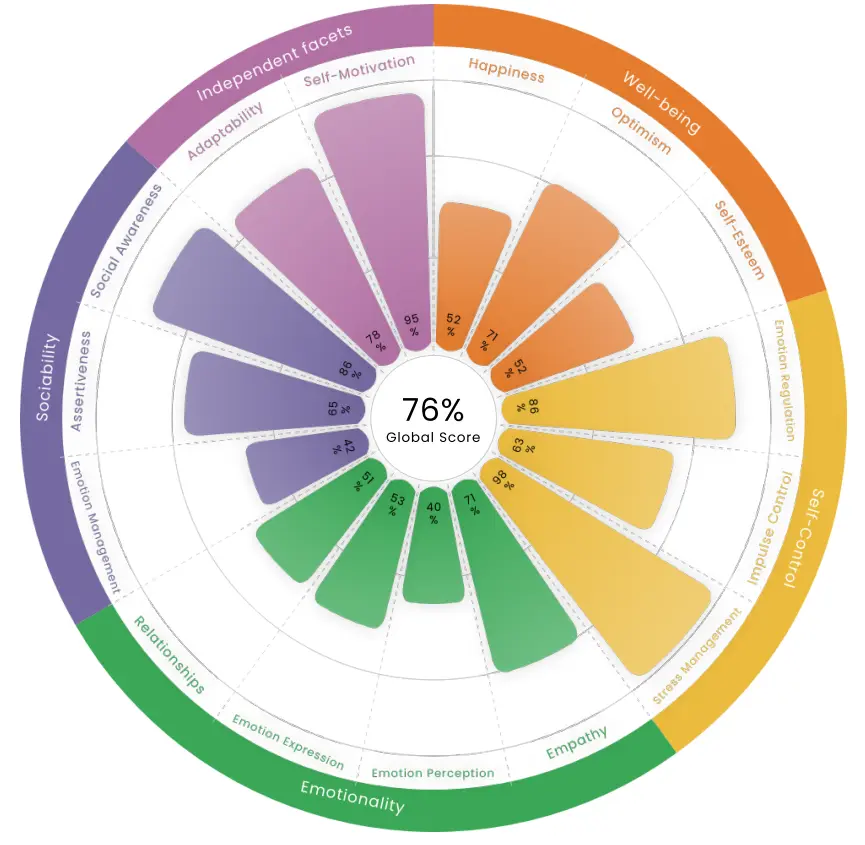
You can’t improve what you don’t measure. Start with a baseline. Tools such as the Trait Emotional Intelligence Questionnaire (TEIQue) can help leaders understand their emotional strengths and blind spots. This assessment provides actionable insights that form the foundation for growth.
One of the most extensively validated methods, it uses Petridies Trait model, to assess 15 traits under 4 main categories:
- Well Being
- Self-control
- Emotionality
- Sociability
- + 2 Independent Traits
2. Coaching and Mentoring
Executive coaching is a great way to build emotional intelligence. Coaches can help leaders reflect on their behaviours, challenge limiting beliefs, and practice new emotional competencies. Peer mentoring also fosters learning through shared experiences and honest dialogue.
3. Training and Leadership Development Programs
Emotional intelligence grows through repetition, not revelation. Small, consistent practices compound over time.
Workshops on emotional intelligence, communication, and conflict resolution can equip leaders with practical tools. Role-playing, case studies, and experiential learning deepen understanding and encourage behavioural change.
4. Mindfulness and Self-Reflection - Create Feedback Loops
Mindfulness practices such as journaling, meditation, or reflective exercises can enhance self-awareness and emotional regulation. Leaders who regularly pause to reflect are better able to respond thoughtfully rather than react impulsively.
5. Embedding EI into Leadership Models
Organisations should integrate emotional intelligence into their leadership frameworks, performance reviews, and succession planning. When EI is valued and rewarded, it becomes part of the company’s DNA.
What Organisations Gain from Emotionally Intelligent Leadership
- Higher employee engagement: Teams led by high-EI managers show 31% higher engagement scores. Engaged employees are more productive, innovative, and committed to organizational success.
- Lower turnover rates: Emotionally intelligent leaders reduce turnover by up to 50% within 24 months. Given that replacing an employee costs 6-9 months of their salary, this translates directly to bottom-line savings.
- Improved team performance: Research shows teams with empathetic leaders demonstrate 20% higher sales performance and make 60% fewer errors than teams with low-EI leadership.
- Greater customer satisfaction: Emotionally regulated teams deliver better customer experiences. When leaders model composure and empathy, it cascades to how employees treat customers.
- Stronger financial outcomes: Organizations in the top quartile for leadership EI show measurably better financial performance—higher profitability, revenue growth, and shareholder returns.
Conclusion: Where to Start Strengthening Your Emotional Intelligence
In an era defined by complexity, uncertainty, and rapid change, emotional intelligence is not a luxury but a necessity. Leaders who cultivate emotional intelligence are better equipped to inspire, influence, and innovate. They lead not just with their minds, but with their hearts, creating workplaces where people thrive and flourish.
I’ve seen firsthand how emotional intelligence transforms leadership. It’s not about being “nice” or avoiding tough conversations; it’s about being intentional, empathetic, and emotionally agile. When leaders embrace emotional intelligence, they unlock the full potential of their teams and themselves.

Author of this Article - Chris Schutte
Chris has over 30 years of experience as a senior manager and entrepreneur in Human Capital and people management. He has worked extensively with psychometric assessments and pre-employment testing, helping organisations hire the right people and build strong teams. Chris has hands-on experience in business development, HR, and improving workplace performance, with leadership roles across industries such as Manufacturing, Retail, and HR services. His practical approach to people and talent makes him a trusted expert in helping businesses get the best from their teams.